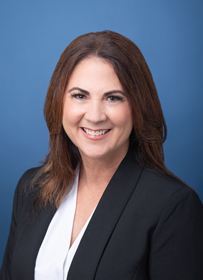
The 83-Year-Old Startup Quietly Powering Travel Payments
Say hello to the payments industry’s 83-year-old startup. That would be UATP (Universal Air Travel Plan), the oldest payment scheme in the world, founded by American Airlines in 1936. In fact, President, CEO & Chairman of UATP Ralph Kaiser told Karen Webster in this week’s edition of Monday Conversations that all UATP cards start with the number “1” because they were the first cards issued 83 years ago.
However, after more than eight decades in business, UATP is a brand that is largely invisible. Consumers have probably never ever heard its name and don’t have a UATP card in their wallet. That’s by design, Kaiser noted, because UATP is an entirely B2B-based payments network that very few consumers ever have direct reason to touch. Corporate travelers, the market that UATP serves, might not have heard of it either, even though the odds are, if they work at a large corporation with an in-house travel desk or with a dedicated corporate travel agent, they’ve booked and paid for a ticket using UATP’s rails.
The global air travel market is notoriously hard to estimate, Kaiser noted, but UATP can confidently estimate that its rails control about 15 percent of it. And though it is U.S.-based, he noted, 80 percent of its business is global — mainly in Europe, but also in China to an increasing degree.
Corporate travelers aren’t UATP’s unwitting customers. For example, consumers who’ve purchased an airline ticket using PayPal will, 90 percent of the time, have that payment processed to UATP on the back end outside their awareness.
UATP has come a long way since 1936.
“We have changed so much from being a consortium inside a trade association to being a real card network that optimizes payment solutions for all of our airline constituents,” Kaiser told Webster. “Even though we are an old company, we’ve been [so] focused on being very innovative in the last 10 years that we call ourselves the 83-year-old startup.”
An 83-year-old that Kaiser said can be nimble, flexible and make changes quickly — on the fly, as it were. Those changes, Kaiser said, have been focused on the airline industry, its esoteric payment systems, and figuring out what the shareholders need, where the friction points are and what problems the payment network can solve for them.
A Unique Set Of Rails For Air Travel
Airlines, he noted, are a unique world in and of themselves when it comes to payments. They are a “truly global business,” he said, (Delta in the U.S. is the same as Delta in Europe) no matter where the takeoff and landing occurs. Airlines are generally single corporate banners that fly in many locations worldwide.
Since airlines fly all over the world and transact in thousands of locations in hundreds of currencies daily, the industry has rather unique payment needs. It has its own clearing house system, where processing and settlement happens between all airline industry players globally once a week. Due to that rather unique facet of the industry, Kaiser told Webster, the UATP network doesn’t even directly move money. It is a data provider to the clearing house and runs the card network for its member airlines.
“In our system, the issuers and acquirers are the airlines, and we run the network and own the merchant contracts. We are a very different model than the three-and-four party models that characterize the payments industry today,” Kaiser explained.
The airlines as issuers, he noted, are able to issue their cards as they wish, within the rules of the network, to suit their corporate customers’ needs. They can issue individual corporate cards to every single member of a corporate customer’s employee base (though that is unusual) or they can issue single lodge cards through which firms can book their corporate travel arrangements. Since UATP was developed for and by the airline industry, the goal is to give the airline industry a way to work directly with its corporate travel sales targets, as those travelers are generally the most valuable in the market.
At present, 26 airlines are UATP issuers in the network, though UATP is currently beta testing a program that would allow travel management companies to issue cards as well.
Airlines that issue UATP payment accounts to their corporate customers receive favorable economics for accepting those payments, and use them to create tailored offers for their corporate customers. Kaiser said that common offerings include unpublished (lower) rates on certain flights, so long as the corporate customer books a certain volume of flights and pays using their UATP account. Those better rates, Kaiser noted, add up quickly, particularly for firms that book a lot of travel.
“If you are a huge firm that spends $100 million a year on airfare, you probably want to make sure that you are getting the absolute best deal you can, because even 1 or 2 percent savings is a lot of value for your shareholders,” Kaiser explained.
And, he added, even though the smallest businesses, perhaps, don’t have much cause to seek out UATP services, well-established middle-market businesses are often well-served by UATP, since it provides a direct connection to the best rates that an airline has to offer.
Improving The Wider World Of Payments
Kaiser noted that, despite its roots as a B2B corporate travel payments network, UATP has been working quietly on the back end for the last several years to improve the payment lives of consumers all around the world — making it easier for airlines to accept the local, regional and alternative payment methods that consumers may want to use to book a flight, and even the hotel packages that airlines may bundle with those flights. Payments made via Alipay, the Netherlands’ iDEAL or even something as mainstream-seeming as PayPal, in many cases, are actually processed over the UATP payments network.
“We are using our network to process alternative payments for airlines,” Kaiser said, adding that airlines don’t want to do multiple integrations with alternative payments providers. Kaiser said that UATP can use the infrastructure it’s had in place for the last 83 years to enable those payments with that one, “already built” connection.
Those connections also don’t cannibalize its core business, since corporate travel departments generally don’t use PayPal to book corporate travel. But by opening up its network, PayPal is able to connect with a massive cross-section of the global airline industry, the airlines get to open up a new and popular payment method to anyone interested in booking a flight without having to do any additional work, and UATP gets an additional revenue stream from allowing PayPal access to its airline network.
Kaiser said UATP is also expanding the definition of alternative payments to include point-of-sale (POS) financing players. He believes that offering alternative credit options will create more of an incentive for people to book trips with the airlines.
“A family of four flying to Paris is $4,000 in airfare in economy, with tickets purchased well in advance,” Kaiser said. “Most families don’t have access to that much cash, but can afford to fit it into their cash flow over 18 months.”
Kaiser also believes that making that kind of payment offering available at checkout will drive incremental sales to airlines, rather than being viewed as a payment method substitution.
“Washing machines are big-ticket purchases, and people buy them every five years. Airline tickets can also [be] very big-ticket items, and some people purchase them every five months, or five weeks. And UATP offers unique access to those customers,” he said.
What’s Next
Today, Kaiser told Webster, Europe is UATP’s biggest market, but its growth in China has been particularly strong.
“We, today, have four issuers in China, and though I’m not sure if we have every single airline taking UATP, we have 25. I think other networks, as a rule, have two or three.”
UATP is working on opening up India today, he noted, which is shaping up to be a bigger challenge than China. He also thinks Africa remains “underserved” and ready to be further developed.
The world, he said, is getting flatter and more connected, powered partially by airlines that are delivering people to more places around the globe than ever before. This means the most important thing UATP can do going forward is not just provide network services to airlines, but guidance in how to use and leverage payments in a world that it helped to connect. A big challenge, he said, for people in the business of flying planes, not building payments data networks.
“Airlines are not structured to be issuing banks by nature,” Kaiser said.
However, airlines don’t need to become banks to gain the benefits of taking on the issuer/acquirer role. They just need the right guidance on how to match their payment offerings to their strategic vision. And the trusted advisor role is where UATP has thrived for eight decades.
To view the article, click here.